
Frank Walter (1926–2009)
The history of Caribbean painting is often written through institutions, exhibitions, and movements. Yet some of its most significant figures developed in near-total isolation. Frank Walter, born in Antigua in 1926, belongs to this category. During his lifetime he lived largely unrecognized, working in obscurity, producing thousands of paintings, drawings, and sculptural objects. Only after his death in 2009 did the scale of his achievement become fully visible.
By Jorge Cuartas
Walter is frequently described as self-taught, naïve, or an outsider. These labels are convenient, but insufficient. He had no formal training and worked outside established art circles, yet his work shows clarity, intention, and depth. He built an entire visual universe without permission, audience, or institutional support. His modernity lies in that independence—personal, self-defined, and unconcerned with established movements.
Self-Portraits
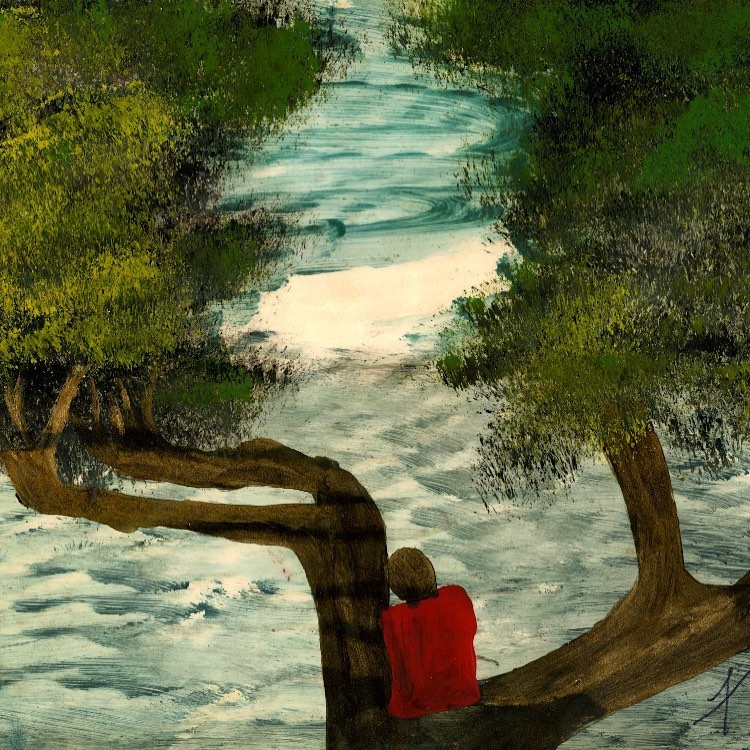
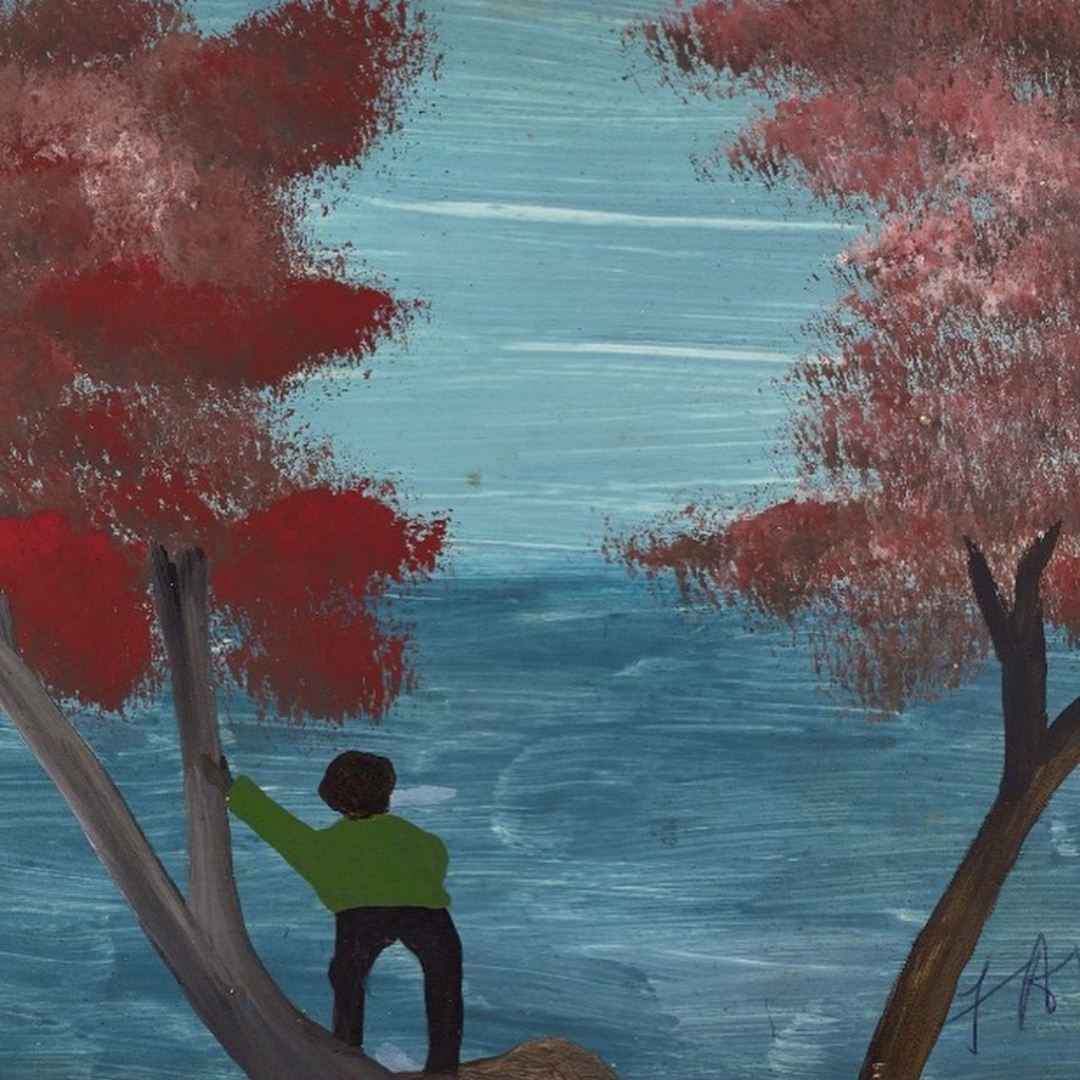
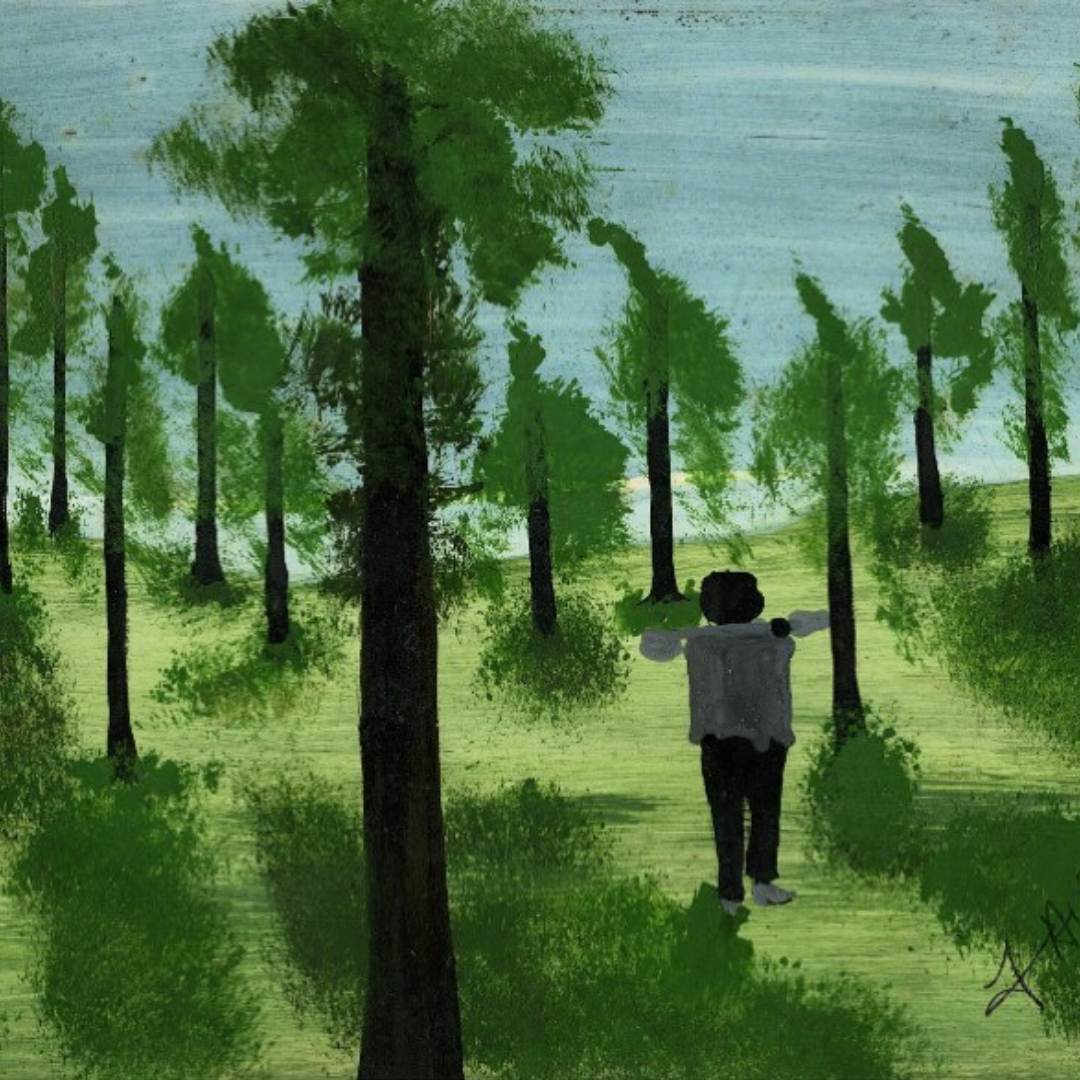
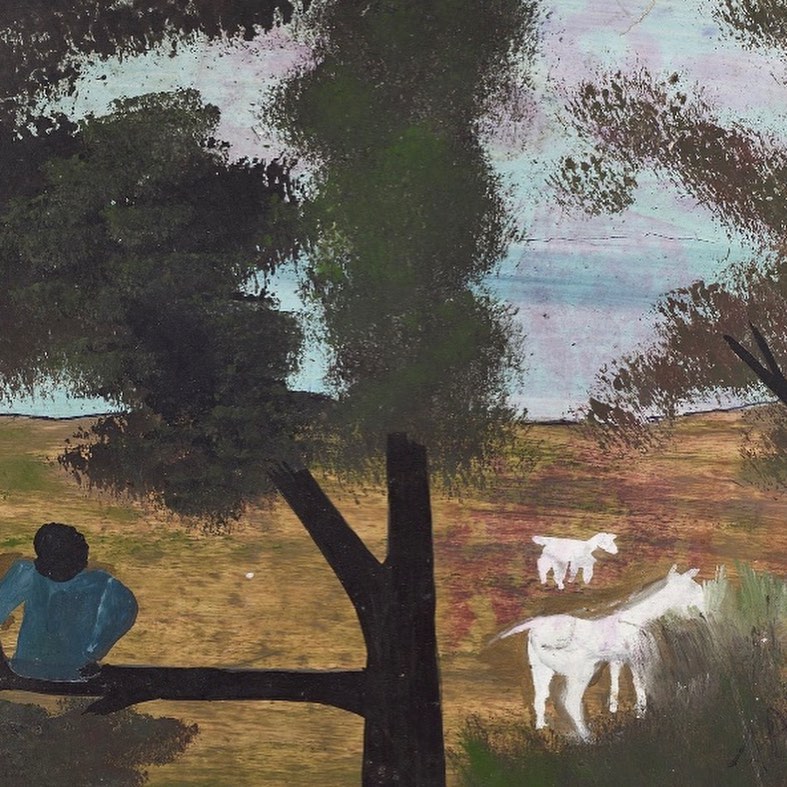
The self-portrait series stands at the center of Walter’s oeuvre. In work after work, a solitary male figure—often identified as the artist himself—appears perched in trees, moving through foliage, or observing from a distance. He wears brightly colored shirts—red, green, blue—small bursts of color against expanses of vegetation or sky.
The repetition is deliberate. Walter paints himself repeatedly, but never theatrically. Suspended between land and sky, the figure is modest in scale yet unmistakable. Sometimes he merges with the greenery; sometimes he separates from it. The tree becomes both refuge and vantage point—a structure that shelters while setting him apart.
These are not portraits focused on resemblance. They show us where the artist places himself—within the land, within history, and apart from society. The tree is not just background. It shapes the scene. It lifts him up, shelters him, and sets him apart.
Material Improvisation
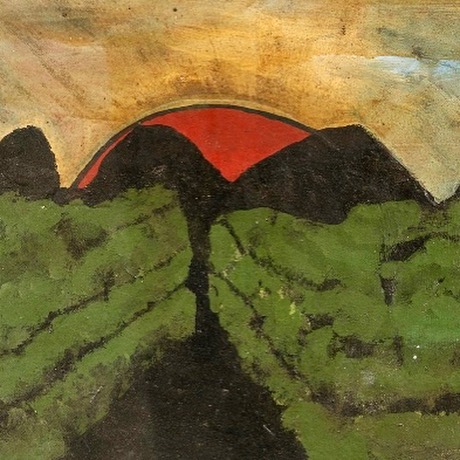
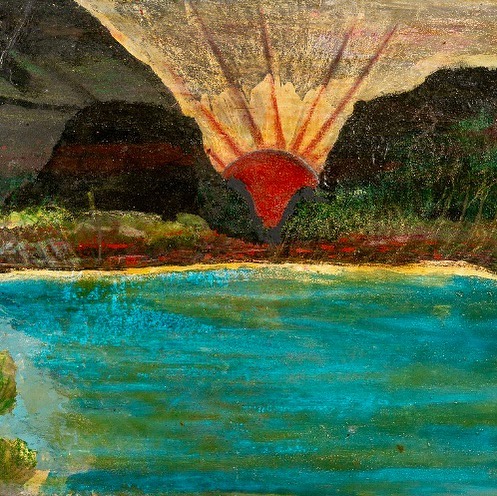
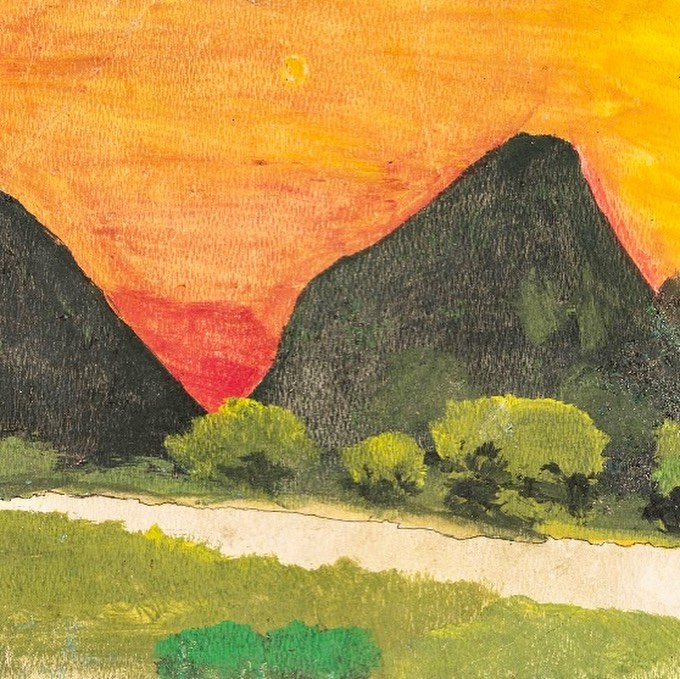
Walter’s choice of materials separates him from conventional art histories. He painted on whatever was available: the backs of photographic paper, pieces of card, discarded materials, even the back of a Polaroid cartridge. These were practical decisions made in conditions of scarcity. Yet scarcity became aesthetic language.
Working on modest and unconventional surfaces, he compresses vast natural forces into intimate formats. Rising suns, saturated skies, and simplified mountain forms reject picturesque Caribbean imagery. There are no idealized beaches, no decorative palm trees arranged for export. Instead, the landscape shifts into mood. Weather becomes both environmental and psychological.
Prolific Isolation
It is now known that Walter produced thousands of works. During his lifetime, however, he lived like a hermit in Antigua, largely removed from the art world. Recognition was minimal. Exhibitions were rare. The scale of his output remained unseen.
This biographical detail is often repeated because it feels dramatic: the isolated genius discovered after death. But the more significant issue is what this isolation reveals about Caribbean art infrastructures during the late twentieth century. Walter’s lack of recognition is not evidence of minor talent. It reflects limited institutional support, weak archiving structures, and restricted international access.
After his death, the discovery of the vast body of work altered his position almost immediately. Major exhibitions in Europe and the United States reframed him as one of the Caribbean’s most compelling modern voices. The posthumous recognition was not revisionist generosity; it was delayed acknowledgement.
Legacy
Walter occupies an unusual place in Caribbean painting. He developed outside formal movements and institutions, yet his work now stands at the center of the region’s modern history. Within Caribbean painting—portrait, landscape, everyday life— he moves across categories. His self-portraits function as landscapes, and his landscapes read as psychological portraits. In that fusion lies his distinct contribution to Caribbean art.
Today, Frank Walter is widely regarded as one of the most significant artists to emerge from the Caribbean in the twentieth century. This recognition came only after his death, through the unveiling of his archive.
His legacy is not merely the story of a hermit rediscovered. It is the story of a painter who created a complete world of his own without audience. He painted out of creative necessity, independent of recognition.
The solitary man in the tree—watching goats, observing the horizon, wearing a shirt that quietly marks his presence—remains one of the most enduring images in Caribbean art. It is an image of distance, resilience, and uncompromising interiority.
Frank Walter did not wait for validation. He painted anyway.
- Paintings used in this article:
- Man in tree wearing red shirt – oil on photographic paper
- Man standing in tree wearing green shirt
- Man in grey shirt walking among trees
- Man with blue shirt in tree watching goats
- Red sunset
- Red sun rising
- Landscape with yellow sky and mountains
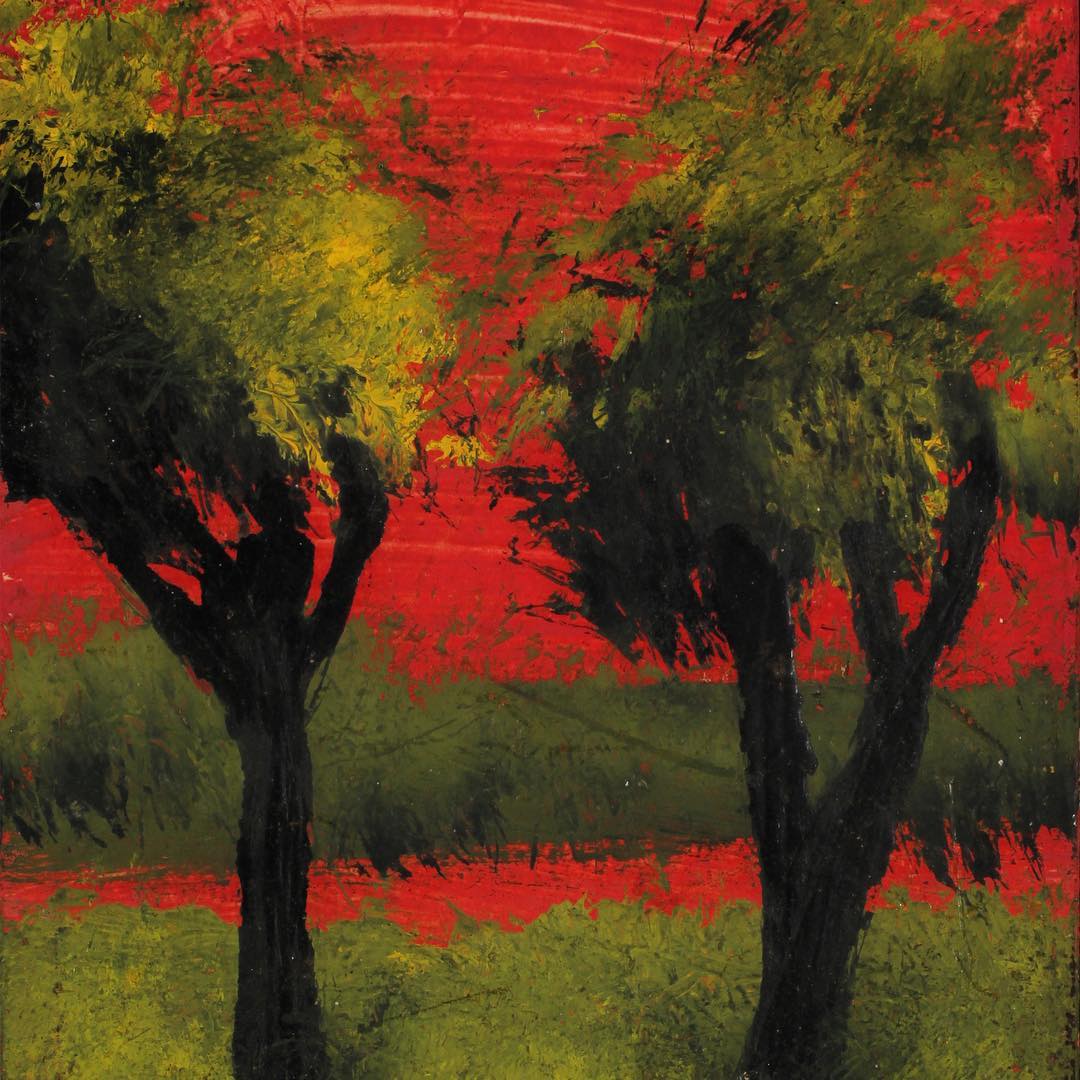
- Tree with upturned leaves in hurricane sky (1976). Oil on back of polaroid cartridge


 Caribbean Painters