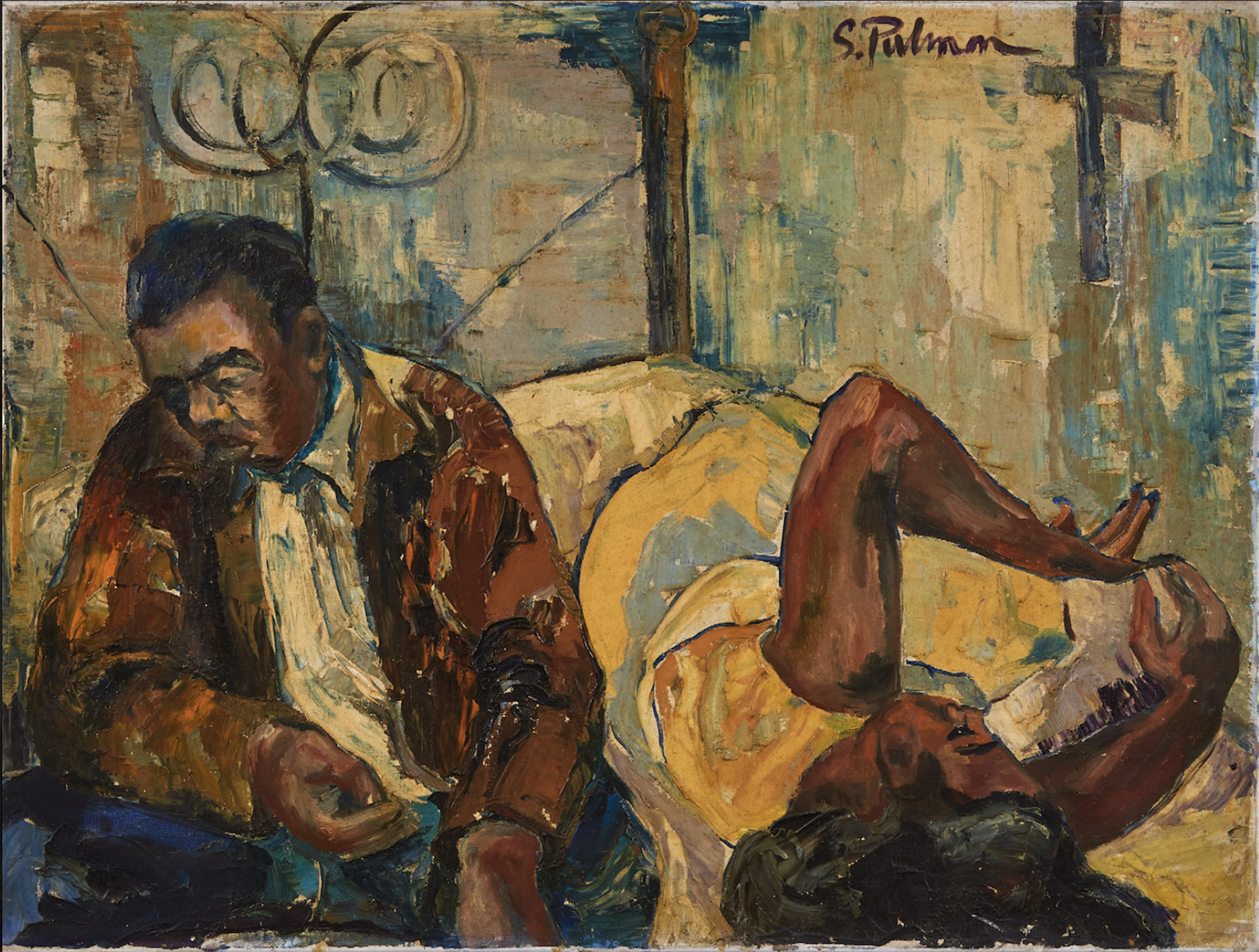
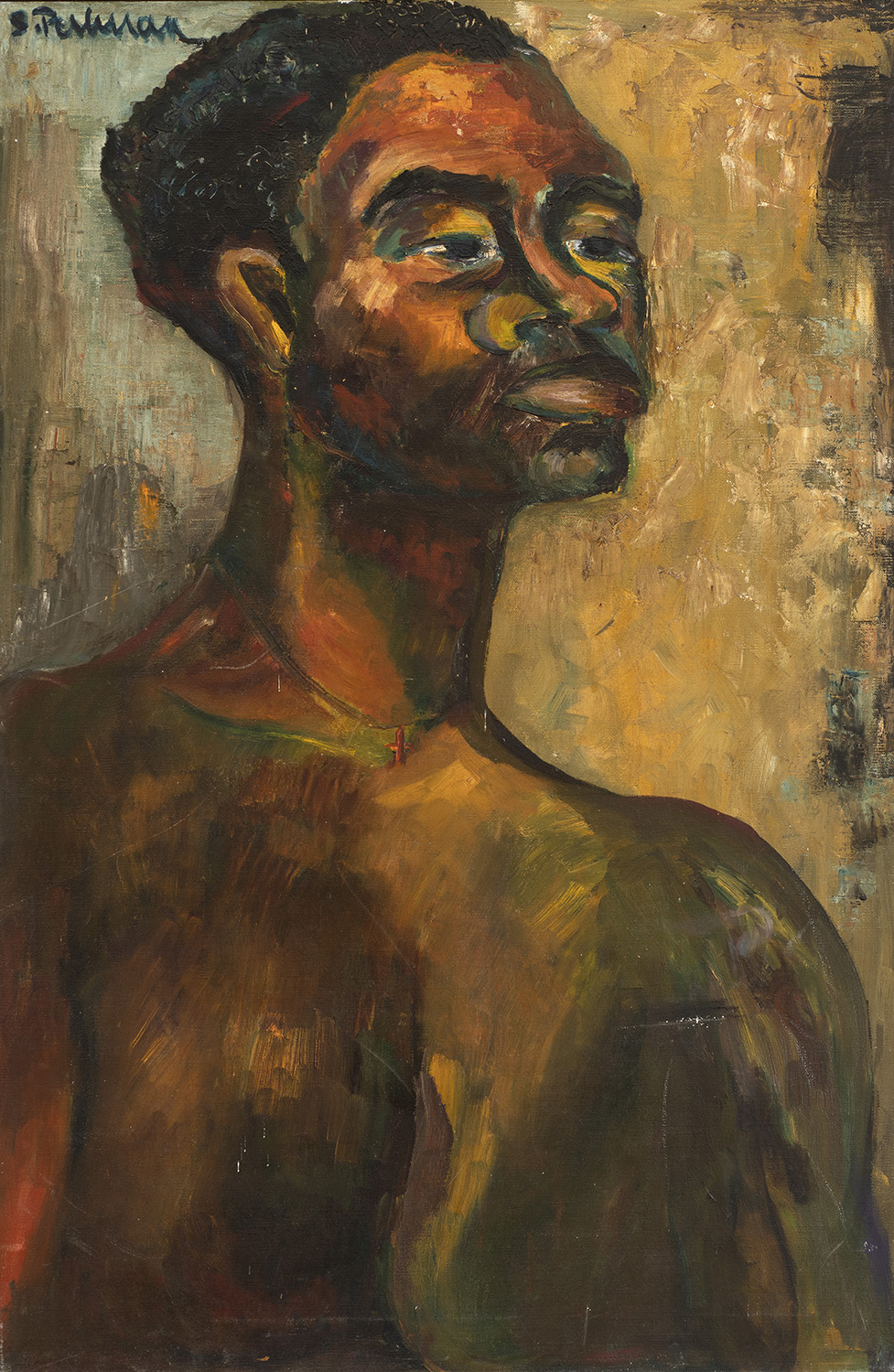
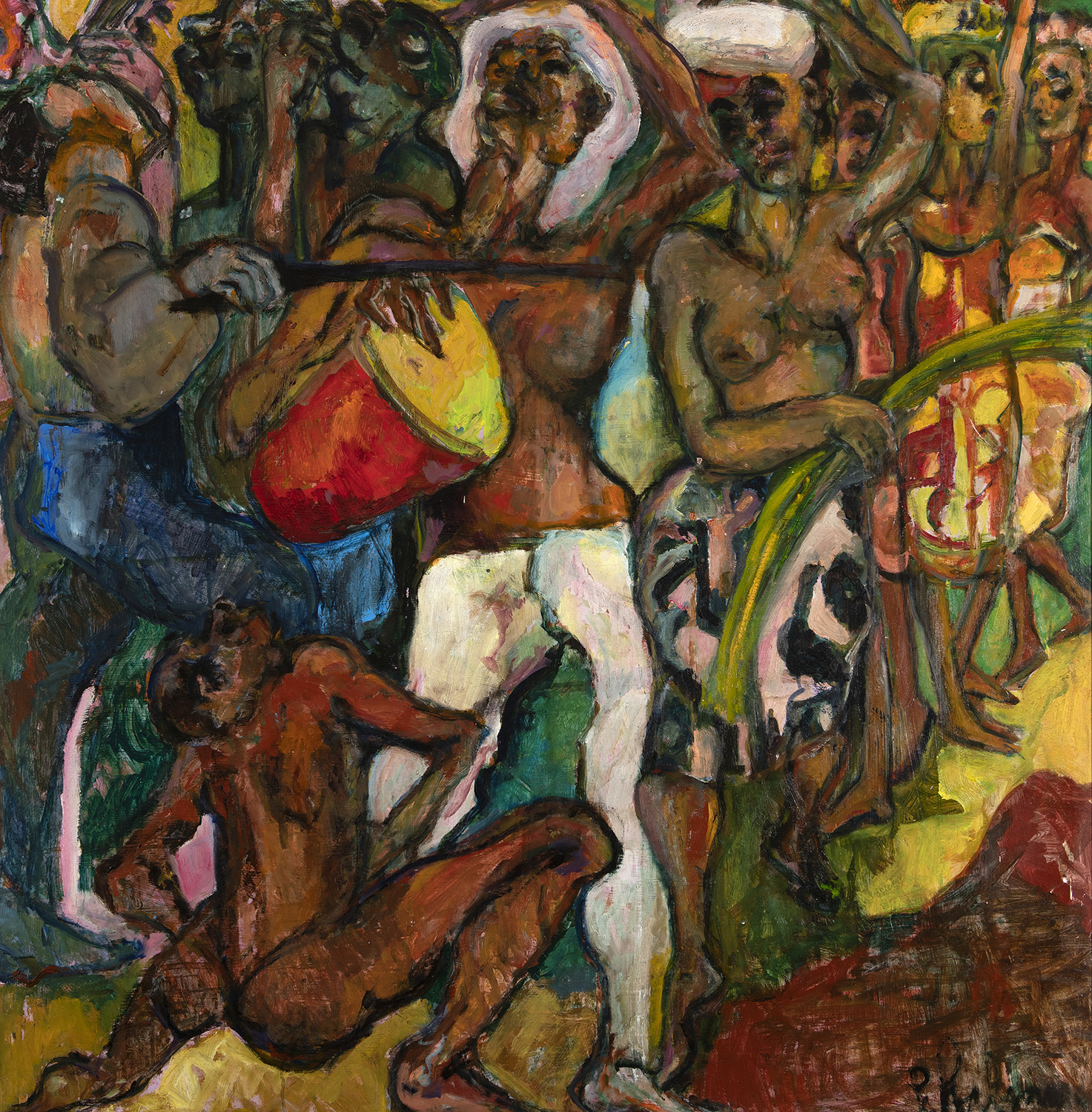
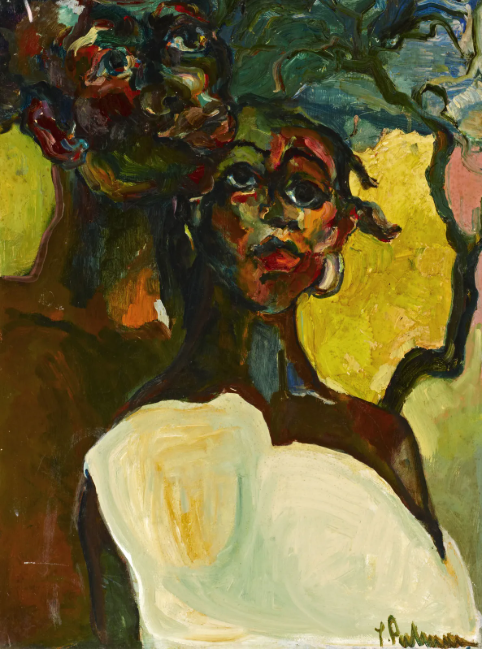
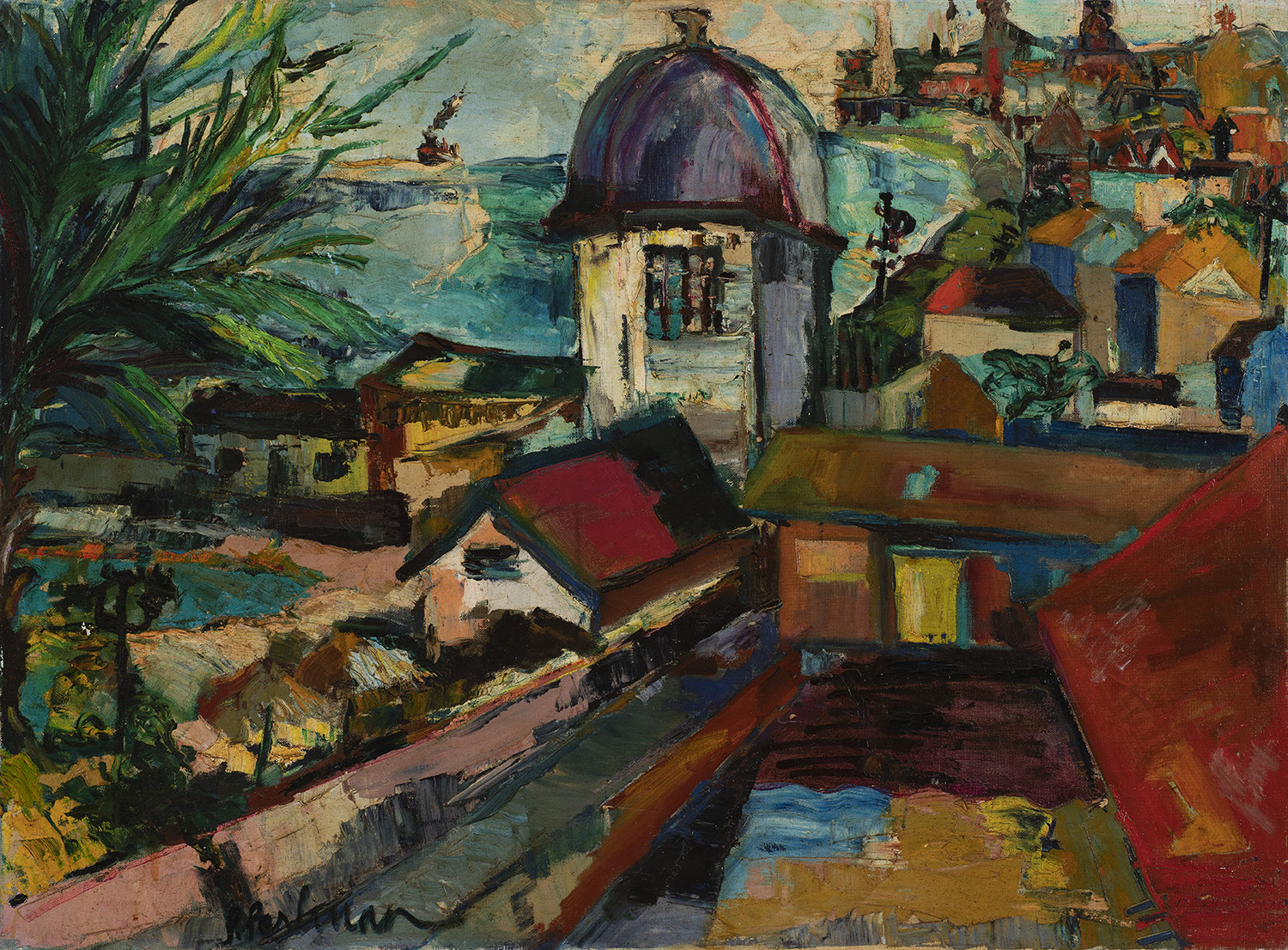
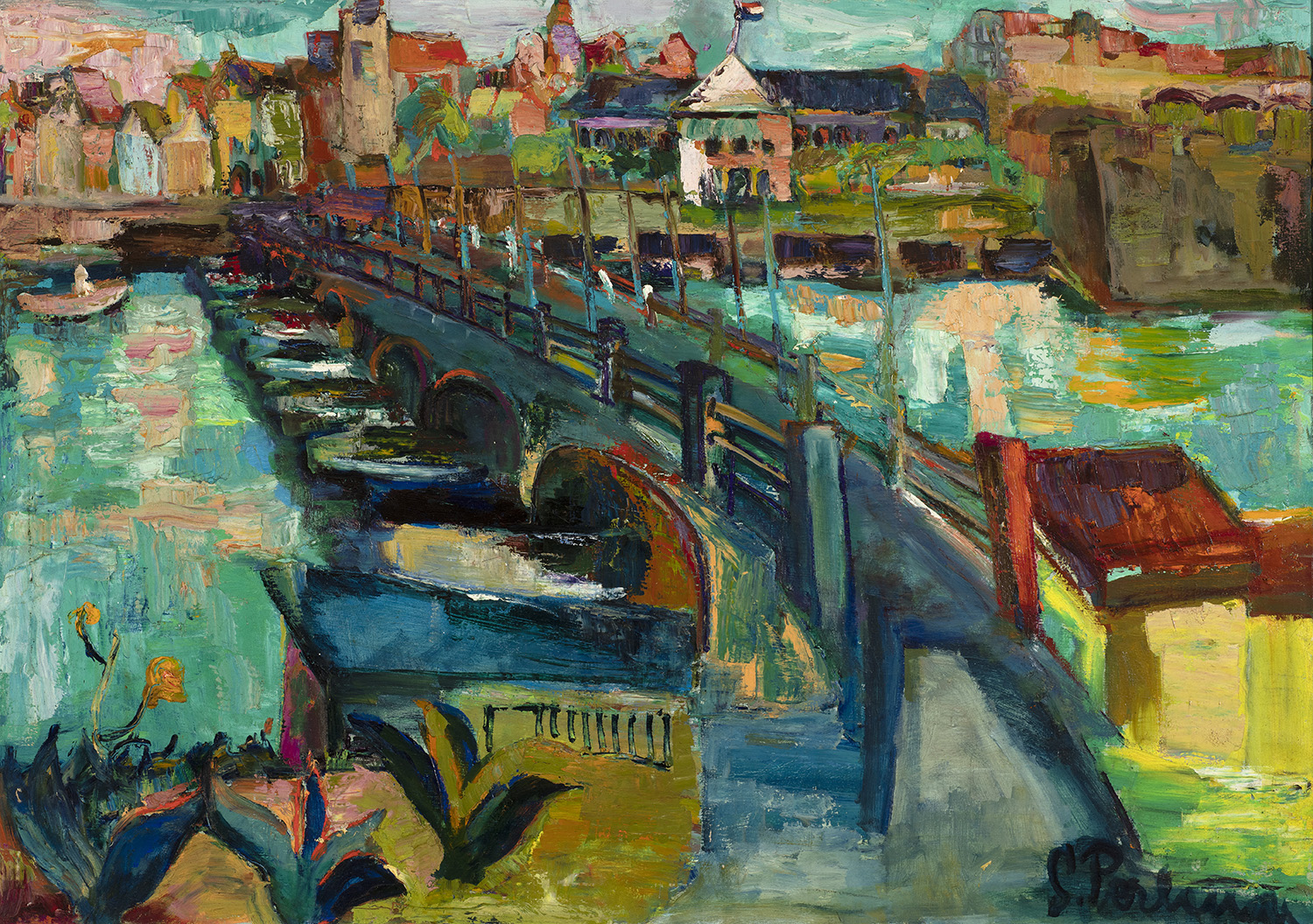
Suzanne Perlman (1922–2020) did not simply pass through Curaçao. She built her life and artistic practice there. A current exhibition in Laren brings renewed attention to her work, but for Curaçao she is not a rediscovery. She is a long-standing presence—an artist who worked on the island for decades and helped shape its modern visual culture.
By Jorge Cuartas
Perlman was not Caribbean by birth. She arrived on Curaçao as a refugee during the Second World War and remained there for more than fifty years. Her artistic formation unfolded there. That fact complicates easy categorization. Where do we place her within Caribbean painting?
Inclusion
Caribbean art is often defined through geography: artists born on the islands, shaped by local histories, working within regional contexts. It also includes members of the Caribbean diaspora—children and grandchildren who were not born on the islands, and who may never have lived there, yet remain connected through heritage and perspective. Birthplace and identity tend to determine inclusion.
Understanding
Perlman did not inherit Caribbean identity. She entered it. Her understanding of the island developed through her paintings. Her Curaçao works focus on everyday life—markets, couples, interiors, street scenes. The figures are never exoticized types or mere decoration. They feel grounded in lived experience. Her paintings suggests that sustained engagement matters. Decades of working on the island placed her within its artistic history, even if her origins lay elsewhere.
The exhibition in Laren brings her work back into view. It shows that Curaçao was not a side chapter in her career. That time shaped her as a painter and left its mark on the island’s artistic development.
Exhibition Information
Suzanne Perlman Singer Laren, Laren, The Netherlands On view until 28 June 2026
Paintings used in this article:
‘Daily Problems’, 1950, oil on canvas, Suzanne Perlman Estate
‘Curaçao Male’, 1971, oil on board, Suzanne Perlman Estate
‘Simadan II’, 1964, oil on canvas, Suzanne Perlman Estate
‘Curacao Lovers’. 1956, oil on board, Ben Uri collection
‘Casa Bolivar’, 1945, oil on canvas, Suzanne Perlman Estate
‘Emmabridge’, 1958, oil on canvas, Suzanne Perlman Estate
The history of Caribbean painting is often written through institutions, exhibitions, and movements. Yet some of its most significant figures developed in near-total isolation. Frank Walter, born in Antigua in 1926, belongs to this category. During his lifetime he lived largely unrecognized, working in obscurity, producing thousands of paintings, drawings, and sculptural objects. Only after his death in 2009 did the scale of his achievement become fully visible.
By Jorge Cuartas
Walter is frequently described as self-taught, naïve, or an outsider. These labels are convenient, but insufficient. He had no formal training and worked outside established art circles, yet his work shows clarity, intention, and depth. He built an entire visual universe without permission, audience, or institutional support. His modernity lies in that independence—personal, self-defined, and unconcerned with established movements.
Self-Portraits
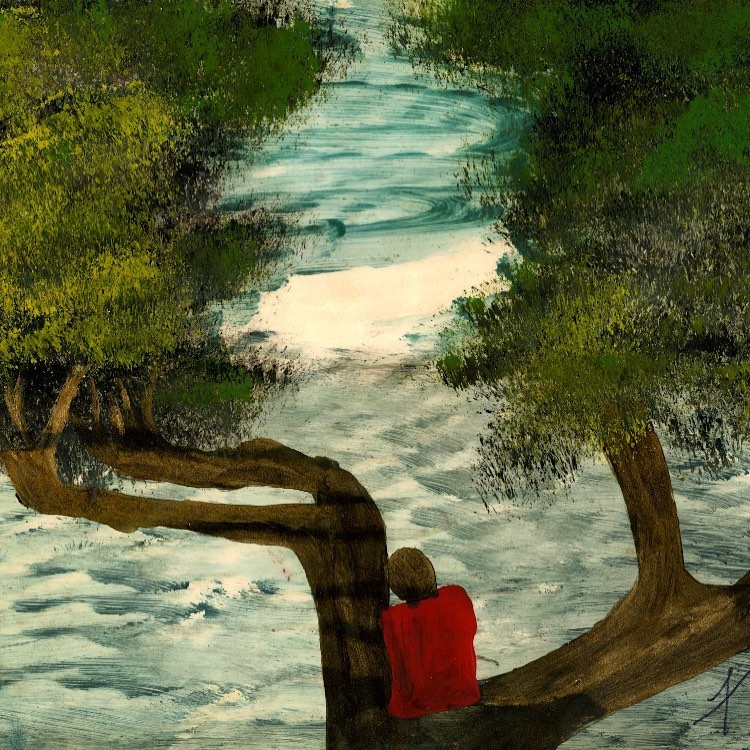
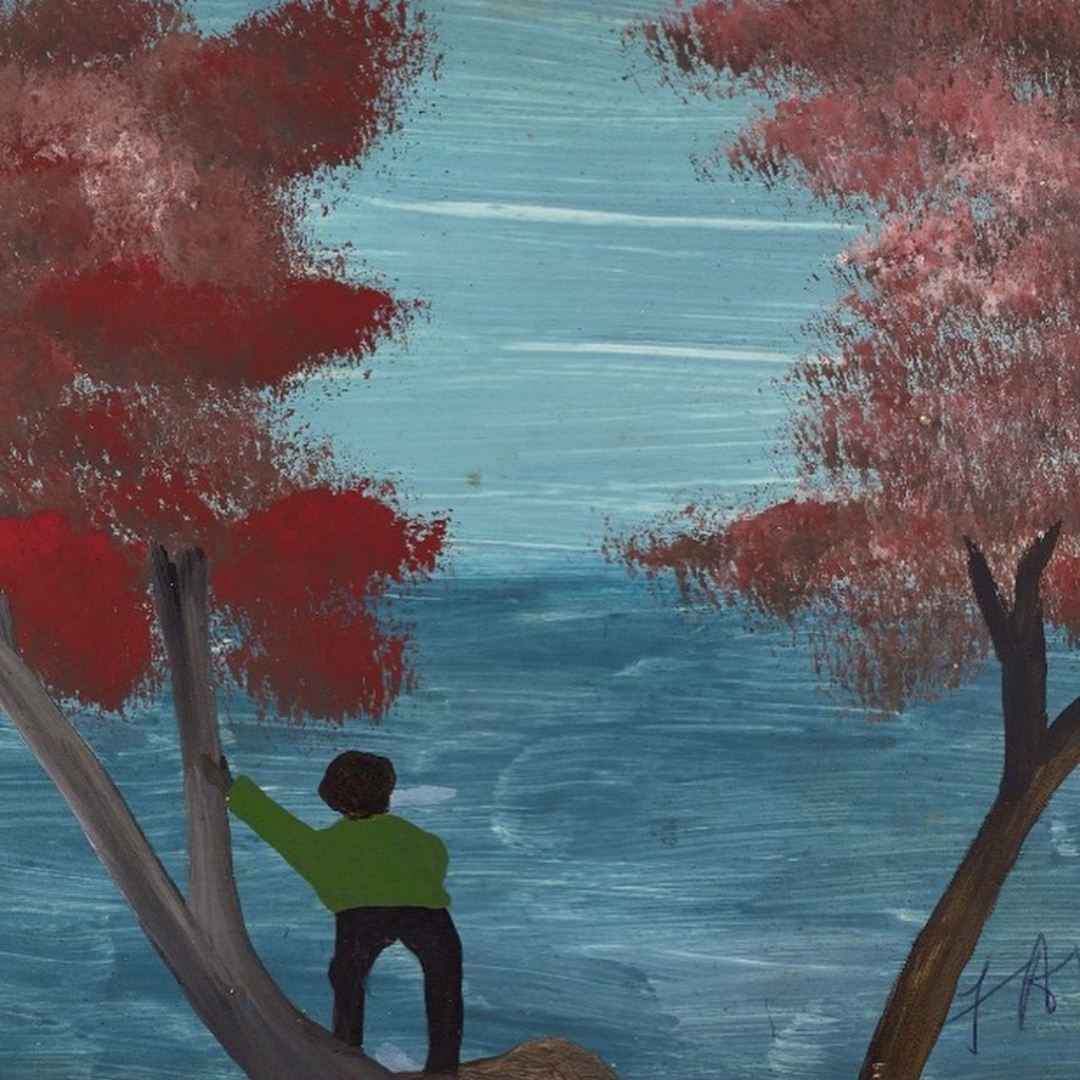
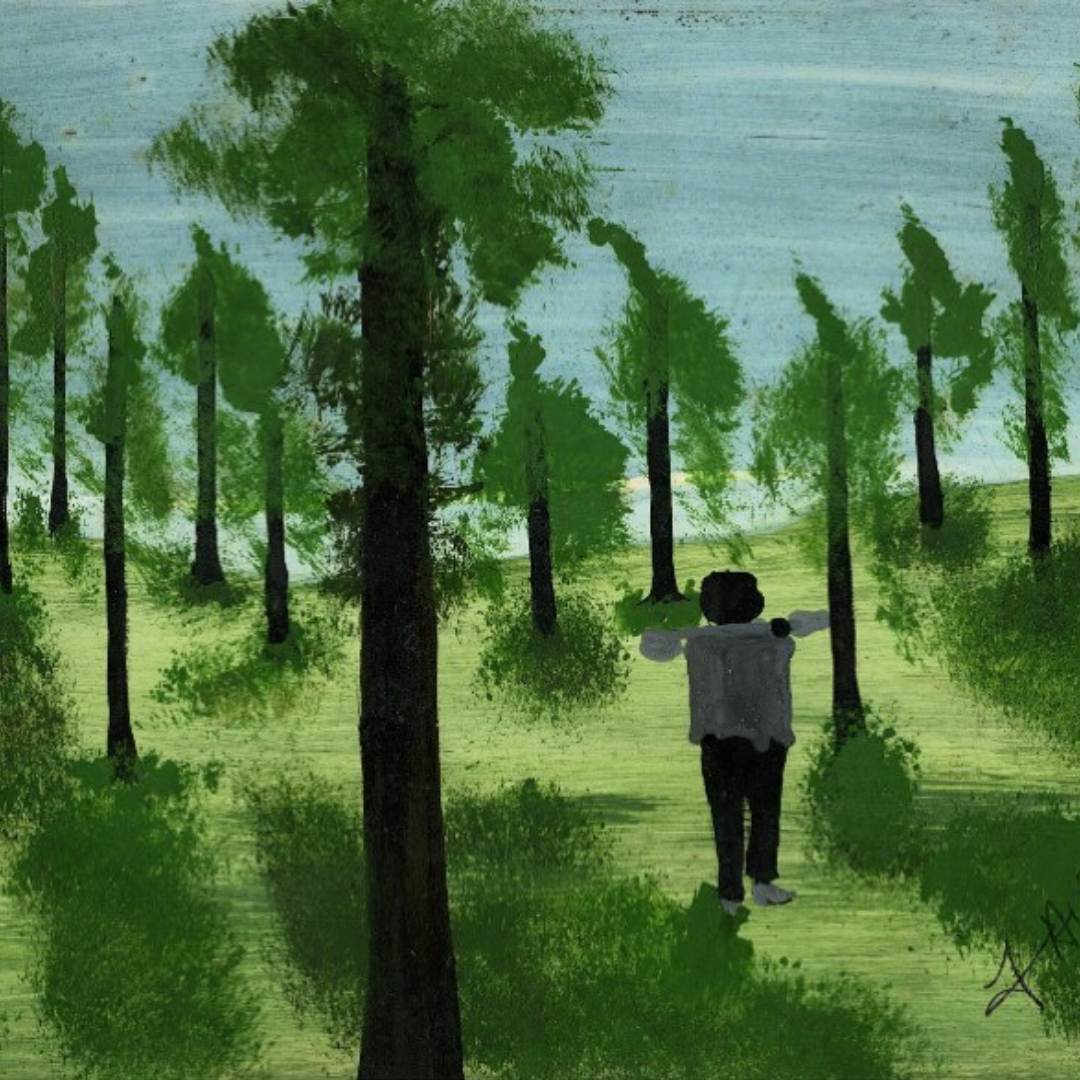
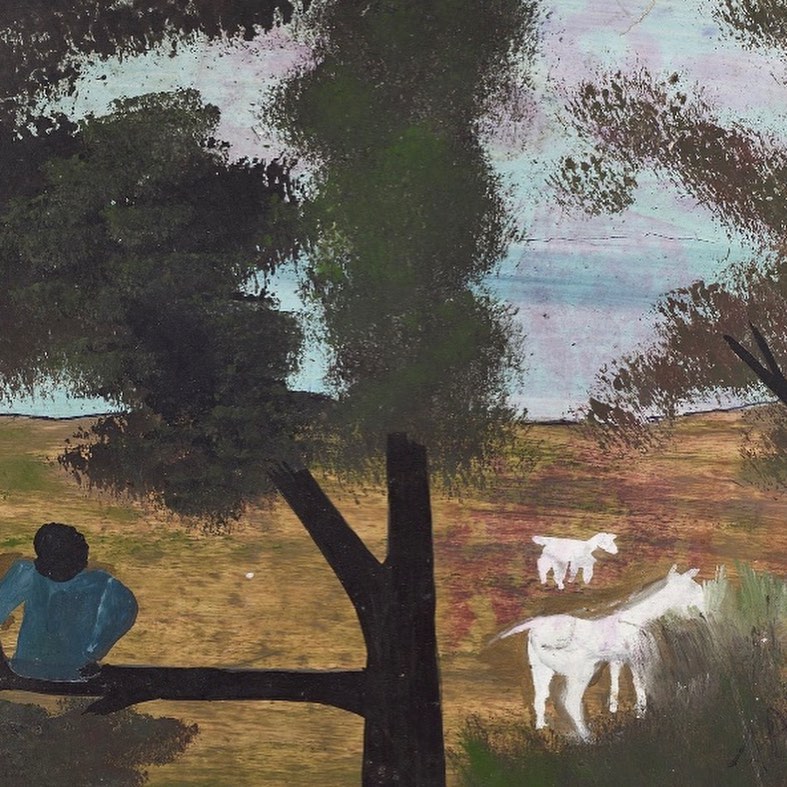
The self-portrait series stands at the center of Walter’s oeuvre. In work after work, a solitary male figure—often identified as the artist himself—appears perched in trees, moving through foliage, or observing from a distance. He wears brightly colored shirts—red, green, blue—small bursts of color against expanses of vegetation or sky.
The repetition is deliberate. Walter paints himself repeatedly, but never theatrically. Suspended between land and sky, the figure is modest in scale yet unmistakable. Sometimes he merges with the greenery; sometimes he separates from it. The tree becomes both refuge and vantage point—a structure that shelters while setting him apart.
These are not portraits focused on resemblance. They show us where the artist places himself—within the land, within history, and apart from society. The tree is not just background. It shapes the scene. It lifts him up, shelters him, and sets him apart.
Material Improvisation
Walter’s choice of materials separates him from conventional art histories. He painted on whatever was available: the backs of photographic paper, pieces of card, discarded materials, even the back of a Polaroid cartridge. These were practical decisions made in conditions of scarcity. Yet scarcity became aesthetic language.
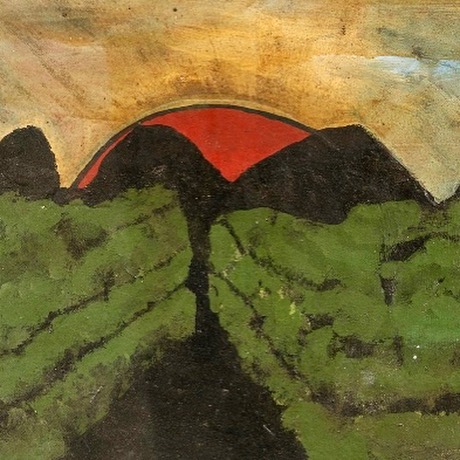
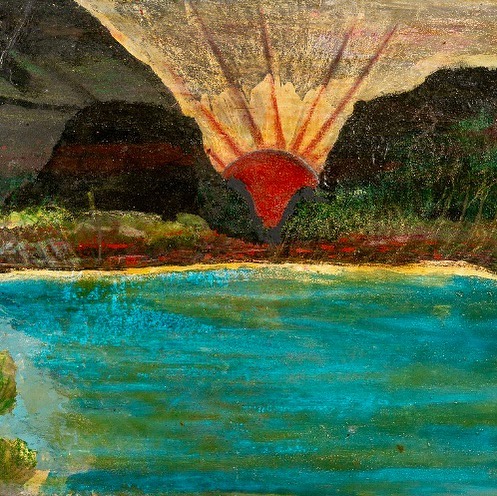
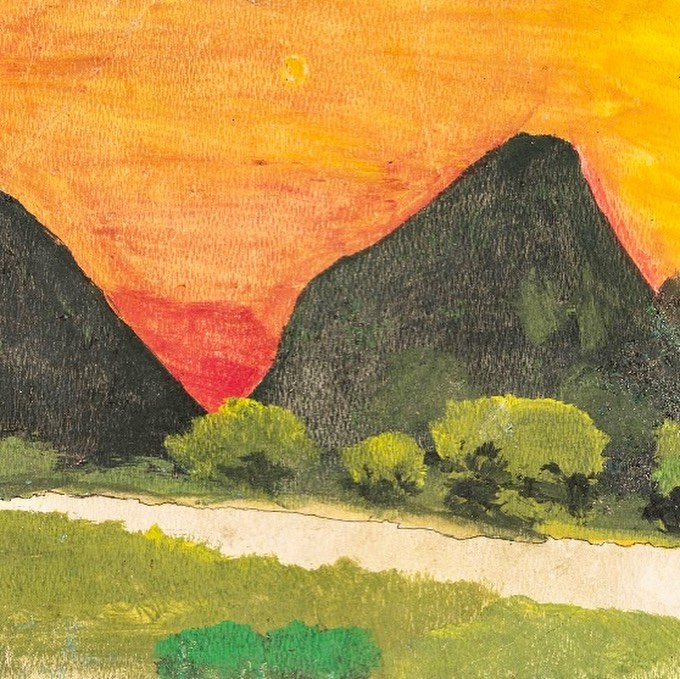
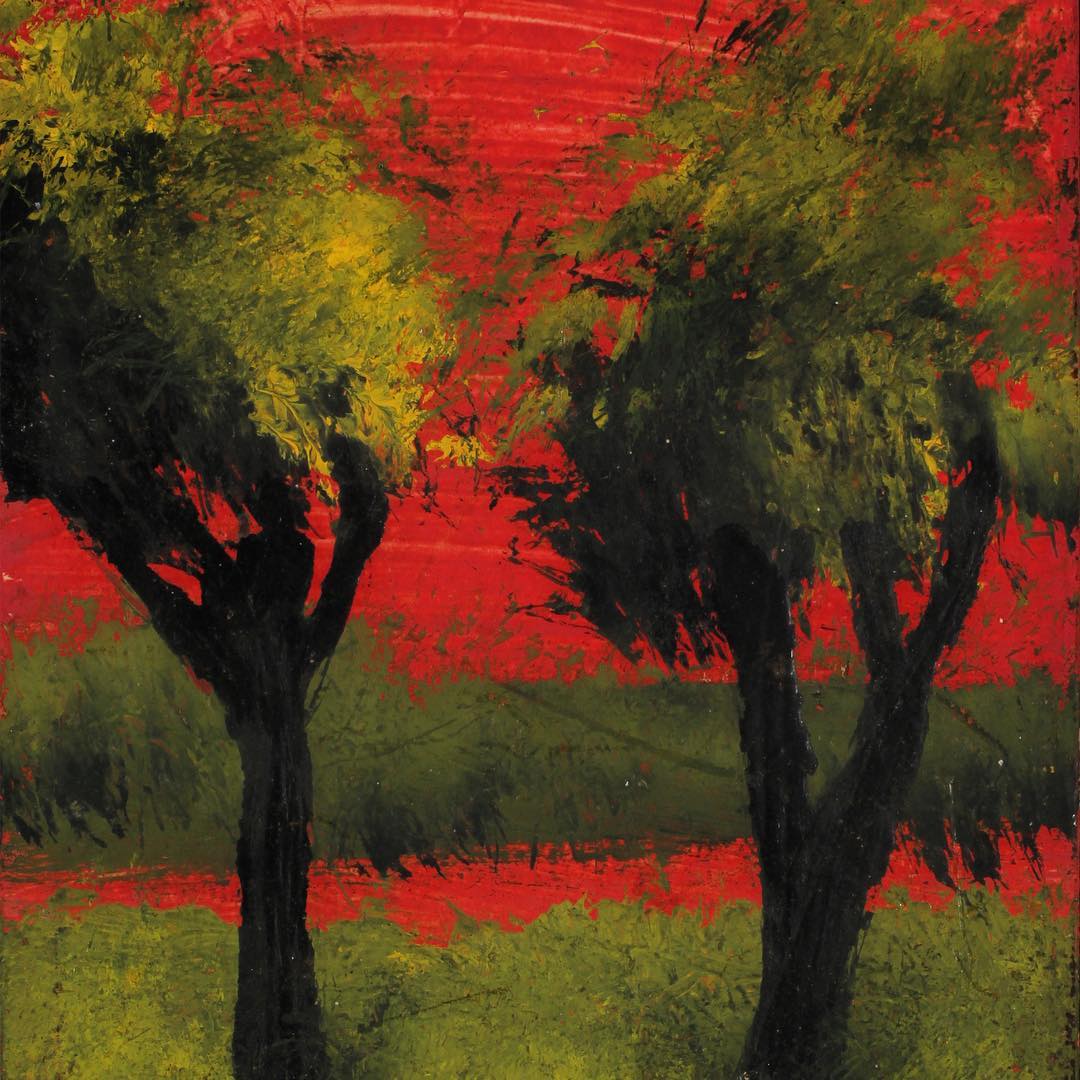
Working on modest and unconventional surfaces, he compresses vast natural forces into intimate formats. Rising suns, saturated skies, and simplified mountain forms reject picturesque Caribbean imagery. There are no idealized beaches, no decorative palm trees arranged for export. Instead, the landscape shifts into mood. Weather becomes both environmental and psychological.
Prolific Isolation
It is now known that Walter produced thousands of works. During his lifetime, however, he lived like a hermit in Antigua, largely removed from the art world. Recognition was minimal. Exhibitions were rare. The scale of his output remained unseen.
This biographical detail is often repeated because it feels dramatic: the isolated genius discovered after death. But the more significant issue is what this isolation reveals about Caribbean art infrastructures during the late twentieth century. Walter’s lack of recognition is not evidence of minor talent. It reflects limited institutional support, weak archiving structures, and restricted international access.
After his death, the discovery of the vast body of work altered his position almost immediately. Major exhibitions in Europe and the United States reframed him as one of the Caribbean’s most compelling modern voices. The posthumous recognition was not revisionist generosity; it was delayed acknowledgement.
Legacy
Walter occupies an unusual place in Caribbean painting. He developed outside formal movements and institutions, yet his work now stands at the center of the region’s modern history. Within Caribbean painting—portrait, landscape, everyday life— he moves across categories. His self-portraits function as landscapes, and his landscapes read as psychological portraits. In that fusion lies his distinct contribution to Caribbean art.
Today, Frank Walter is widely regarded as one of the most significant artists to emerge from the Caribbean in the twentieth century. This recognition came only after his death, through the unveiling of his archive.
His legacy is not merely the story of a hermit rediscovered. It is the story of a painter who created a complete world of his own without audience. He painted out of creative necessity, independent of recognition.
The solitary man in the tree—watching goats, observing the horizon, wearing a shirt that quietly marks his presence—remains one of the most enduring images in Caribbean art. It is an image of distance, resilience, and uncompromising interiority.
Frank Walter did not wait for validation. He painted anyway.
Paintings used in this article:
Man in tree wearing red shirt – oil on photographic paper
Man standing in tree wearing green shirt
Man in grey shirt walking among trees
Man with blue shirt in tree watching goats
Red sunset
Red sun rising
Landscape with yellow sky and mountains
Tree with upturned leaves in hurricane sky (1976). Oil on back of polaroid cartridge
‘I am the Land’ (2015), mixed media by Heidi Berger
Heidi Berger is a self-taught artist who has been living in Barbados for the last 20 years. Aside from four years of private art lessons as a teenager, Berger learned what she knows about art from researching books about different styles and artists.
The self-awareness and dignity of Caribbean Women are the main topics in her paintings. “The women of Barbados have inspired me with their resilience, their courage, their humor and their compassion, sometimes in spite of adversity in the form of poverty, abuse or lack of education” says Berger. “By painting them as strong, thoughtful individuals I like to show them in their individuality and support their strength.”
‘Woman with Flowers in her Hair’ (2009), watercolors on canvas by Heidi Berger
‘Women’s Work’ (2013), mixed media by Heidi Berger
Berger pays extra attention to the background of her paintings. She pours layers of watercolors on her paper or canvas and reworks the surface with pastels, graphite and charcoal. She also inserts seemingly random words to emphasize the power of women. Her paintings have been exhibited in Barbados, Canada and the United States.
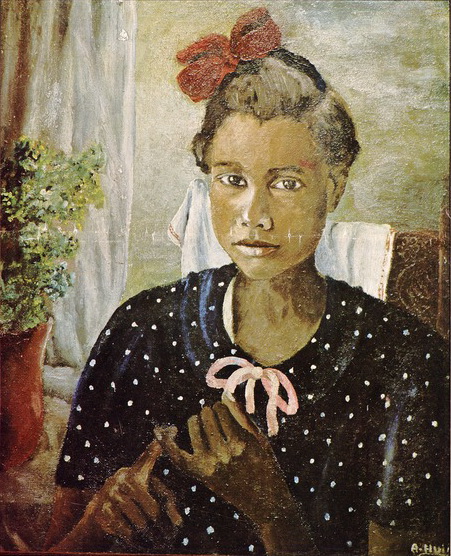
‘The Counting Lesson’ (1938), oil painting by Albert Huie
The representation of blacks as subjects in Jamaican art remained almost absent until Albert Huie (1920-2010) entered the art scene. Huie was artistically formed in an era where Ethiopianism, Rastafarianism, Garveyism, and cultural nationalism transformed the island’s social and political landscape. He incorporated the collective ideas of these movements about a black African consciousness and a black Jamaican culture in his works.
By Jorge Cuartas
In early Jamaican art, black inhabitants played a marginal role; they were portrayed as part of the scenery. This image was replaced in the late nineteenth century by the ‘market woman’, a stereotype introduced on postcards, photographs and advertisements as part of the first efforts to promote Jamaica as a tourist winter resort. Although represented in the foreground, the market woman is characterized as primitive, backward, childlike, barefooted, picturesque, tropical, and full of queer superstitions.
Albert Huie’s The Counting Lesson (1938) represents an important turning point in Jamaican art. In it a black young girl is the central point. The girl, looking intently at what is in front of her, is counting. She wears a polka dot dress, her hair is neatly coifed with a red bow, and the finger poised in midair stresses her mental calculations. All elements of the painting point to the girl’s education, respectability, and civility.
Detail ‘The Counting Lesson’ – polka dot dress
Detail ‘The Counting Lesson’ – red bow
Detail ‘The Counting Lesson’ – poised finger
On its surface the work is fairly unremarkable. However, in the Jamaican context of the 1930s, the painting changes the focus of black people as subjects in art. No longer are they part of the scenery, or used to emphasize stereotypes, but now they are the central focus of the painting. By fitting the girl into the frame of art, Huie allowed black viewers to attribute to themselves the signs of distinction, prestige, and self-hood formerly reserved for the white colonial elite.
Today, Albert Huie is locally and internationally acclaimed as a key figure in Jamaican art and remembered as ‘The Father of Jamaican painting’, but in many ways it is ‘The Counting Lesson’ that set him apart from others. The painting can be seen at National Gallery of Jamaica, where it is on permanent display.
‘La Metres Sirene’ oil on board by Hector Hyppolite
‘Maitresse Congo’, oil on masonite by Hector Hyppolite
Hector Hyppolite (1894-1948) is a legendary artist of Haiti, known for his complex, intuitive paintings. He used chicken feathers, his fingers and brushes to create his master pieces, which have a free and bold style. He did most of his work during the last three years of his live, where at the Centre D’Art in Port-au-Prince he produced between 250 and 600 paintings. Only about 100 of these have been located today.
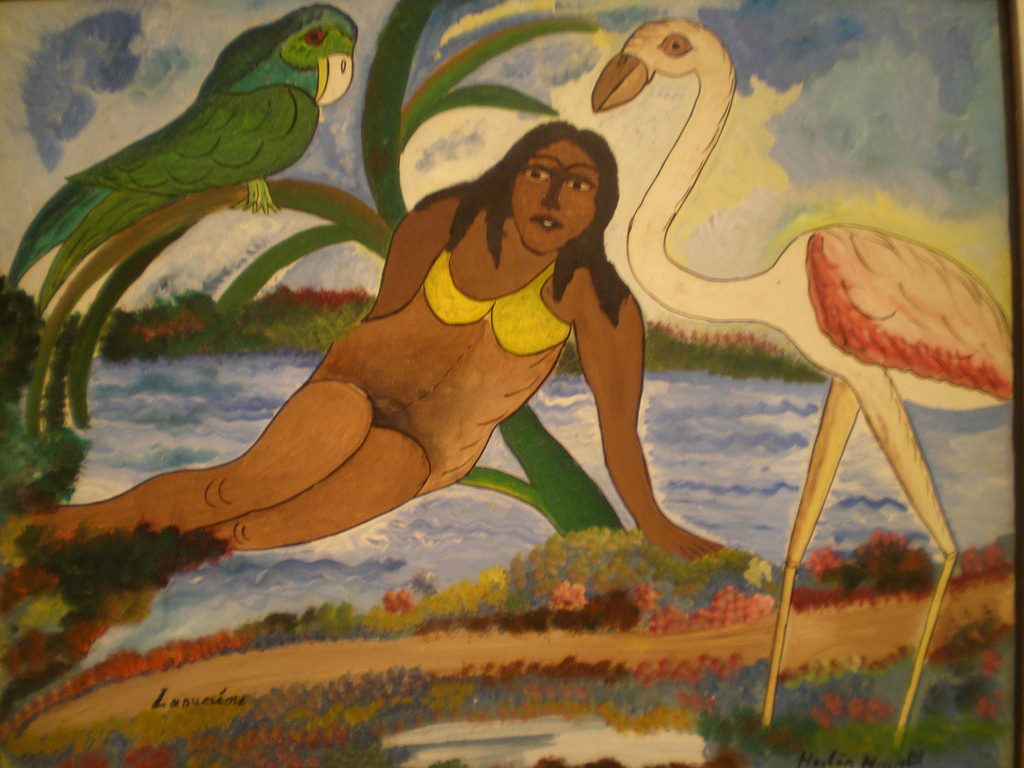
‘The Siren’ by Hector Hyppolite, Milwaukee Museum of Art
Being a third generation Voodoo priest, most of his paintings depict his religious convictions. He shows us voodoo gods that are crude and ugly and combines these with a warm palette that add to the expressive powers of his images. His heroes are reincarnations of Voodoo spirits (Loas); his empty backgrounds symbolize the beyond; his flowers are metaphors of perpetual life; his birds refer to the supernatural world; and the hypnotic eyes of his subjects evoke the serpent eyes of Damballah.
‘Maitresse Erzulie’ by Hector Hyppolite
He is collected and has been exhibited around the world, including the Musee d’Art Haitien du College Saint Pierre in Port-au-Prince, the Museum of Modern Art in New York, the Smithsonian Institution, the Milwaukee Museum of Art, and the Museum of Everything in London.
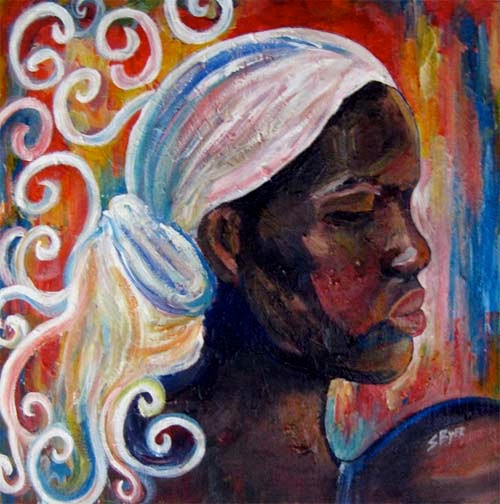
Stacey Byer is a Grenadian abstract-expressionist who uses colorful, bold palettes and heavy brushstrokes to invoke the rich and colorful culture of the Caribbean. With her work she wants to change the perception that art in Grenada is only ornamental and commercial.
“I think painting beaches, boats and sunsets is fine, but you can be a Caribbean artist and do other things”, says Byer. “If I wake up in the morning and eat pancakes instead of bakes, that doesn’t make me less Caribbean. Art is like that too. I can do pancakes and still be Caribbean.”
Stacey Byer is co-curator of the Women Make Art (WOMA) project, a groundbreaking recurring Grenadian event, featuring solely locally-based female artists. “The art scene here does not truly tell us who we are or might become, as very few of our artists question identity, individual or collective memory. Many of the works produced are for buyers who want images of colorful villages or markets.”
‘Woman with Fan’ by Stacey Byer. Watercolor.
‘Not Today’ by Stacey Byer. Watercolor
Stacey Byer has a BFA from the Ringling College of Art and Design in Florida. She currently concentrates on illustrating children’s books. Her paintings have been sold Barbados, Grenada, the USA, Europe and Asia.
The quotes in this article were taken form in an interview with Caribbean Beat back in 2012.
When he started exhibiting his paintings in the mid-sixties, Jorge Severino from the Dominican Republic didn’t have a clue to what he was doing. Reviewing Severino’s first exhibition in 1966, art critic Contín Aybar commented that “the ten paintings could easily have been created by six different artists. There is no common style in them”. So when Severino sold his first painting for $75, he was astonished that people would even pay for his work. Nowadays his paintings are hard to come by and cost $12,500 or more.
By Jorge Cuartas
‘Do you like Klimt’ by Jorge Severino. Silkscreen
From the ‘Morena’ series by Jorge Severino. Oil and acrylics on linen.
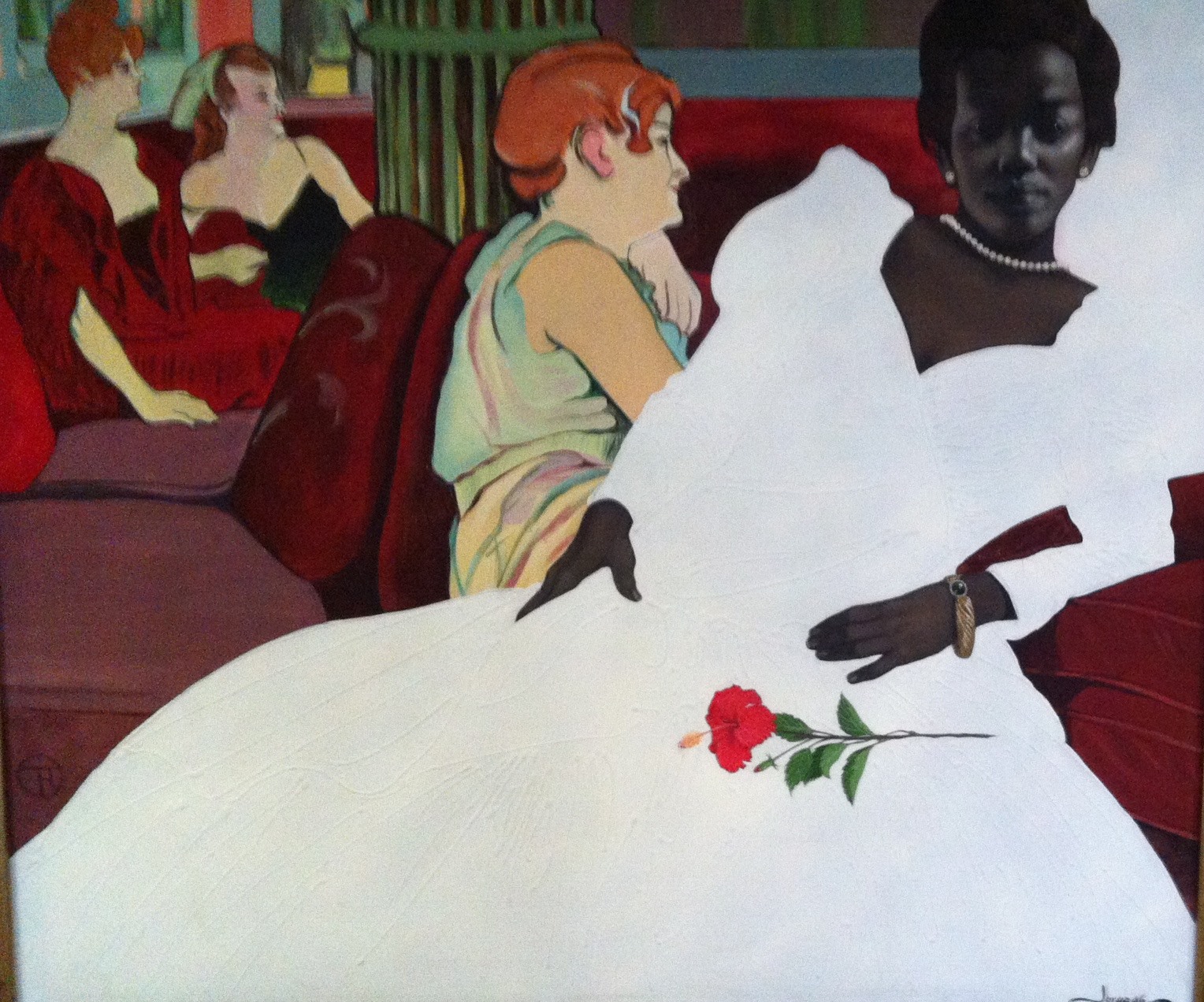
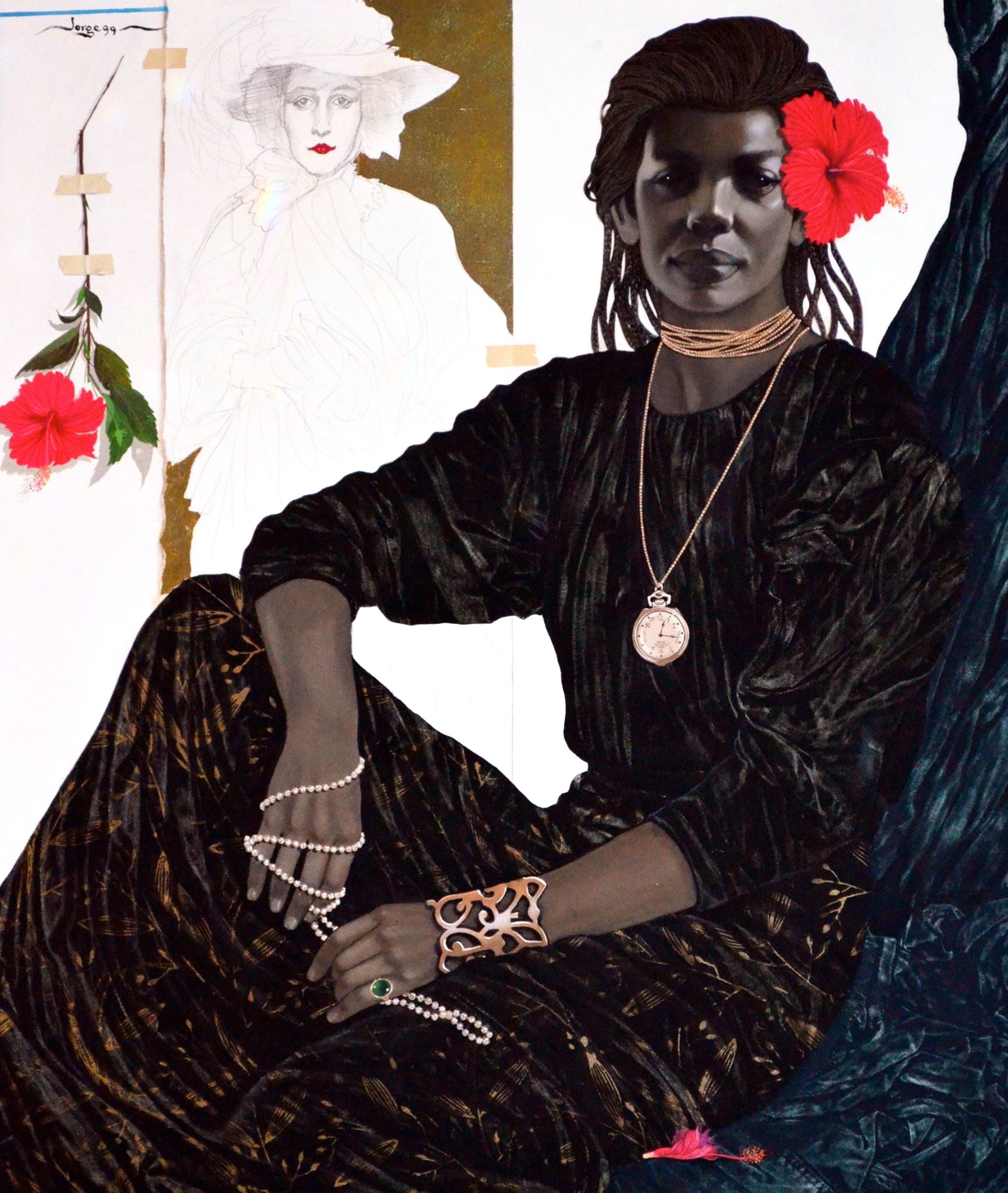
Severino came to his own when he started painting black woman in luxury dresses. Using mostly a combination of oil and acrylics and never an easel, these black society women are decorated with over the top jewelry, silk dresses and red flowers. They stare defiantly at their observers.
Severino is a representative of the magical realism movement, to which Gabriel García Márquez also belonged. His paintings are based on an imaginary photo album found in the attic with written indications in the margins about the Tia Clotilde in Paris, and the Tio Roque at the Prado Museum in Madrid. Severino uses this family to mock the megalomaniac fantasies of middle and upper classes of the Caribbean.
His brilliance not only lies in transforming the perception of black women’s reality, but also in adding surrealistic elements to his paintings. Look for floating keys, football goal posts, or red fishes swimming in the air as part of his decorations.
Jorge Severino’s paintings have been shown in Europe, Latin America and the United States. He has won several international prizes for his paintings and is considered one of the Master Artists of the Dominican Republic.
Paintings used in this article:
‘Debut en sociedad di mi prima Cleotilde’, Jorge Severino. Oil and acrylic on linen.
‘Do you like Klimt’, Jorge Severino. Silkscreen.
‘Morena’, Jorge Severino.
‘Tía Gertrudis que era amante de Toulouse, haciendo antesala en el Moulin Rouge’, Jorge Severino. Oil and arylics on linen
‘Prima Johanna posando para Hector Baez’ by Jorge Severino. Oil and acrylics on linen.
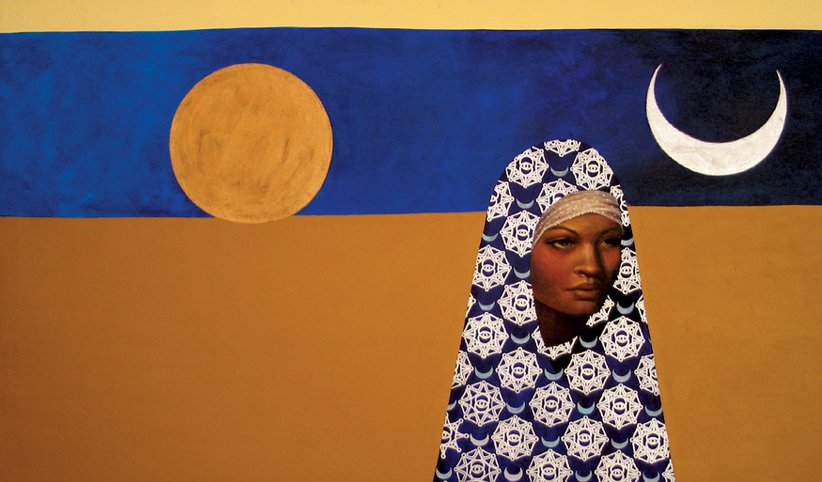
Jennifer Lewis (1966-2012) aka Louie Pepperstone created a contemporary, powerful vision of the identity of black Caribbean women. Starting in the late eighties, when positive Afro-Caribbean imagery was not so readily available as today, she pioneered in combining the vibrant, natural colors of her native country Saint Vincent with African themes. The results were portraits of women that empowered black people around the world.
‘Full Moon’. Acrylic on canvas by Jennifer Lewis “Pepperstone”.
‘Guidance’. Acrylic on canvas by Jennifer Lewis “Pepperstone”.
She grew up in London where she studied Jewelry Design at Central St. Martins. Her work was exhibited in several galleries in London and in the Caribbean. The colors, textures, history, religion, and folklore of Africa and the Caribbean were her inspiration. On her canvases she used acrylics, watercolor, relief, print and collage, woven with gold and silver leaf. Most of her work today is in private collections.
‘The Conversation’. Acrylic on canvas by Jennifer Lewis “Pepperstone”.
‘Turquoise’ Acrylic on canvas by Jennifer Lewis “Pepperstone”.
‘Girl with the Thousand Yard Stare’ by Esther Griffith. Oil on Canvas.
‘Heavy’ by Esther Griffith. Oil on Canvas.
Esther Griffith really likes her colors. Using layer upon layer of paint she creates rich, deep, vibrant and expressive colors. Greens and reds are her favorites. “I enjoy using oils”, says Griffith. “They create beautiful, unexpected effects.”
‘Escape’ by Esther Griffith. Watercolor.
‘Indomitable’ by Esther Griffith. Watercolor.
She was born and lives in Trinidad, where she studied Visual Arts at the University of West Indies at St. Augustine. Most of her paintings are portraits, which she shows like masks, resulting in a delightful contrast of hyper realism and abstraction. “I love experimenting with color, form and texture to produce unique effects”, says Griffith. “My paintings are inspired by the vivid features of nature, the earth and its surface.”
‘Armelle’ (1997) by Elizabeth Colomba. Oil on canvas.
‘The Storm’ by Elizabeth Colomba.
Inspired by the Old Masters, contemporary painter Elizabeth Colomba (b1973) shows black people in classical settings. Using iconography as a tool, she re-interprets history while at the same time challenging and exploring issues of identity.
Of Martinique descendant, Elizabeth Colomba, was born and raised in Paris. She was classically trained at the Auguste Renoir, the Estienne School of Art and the Ecole des Beaux Arts in Paris. She uses both oil and watercolors.
‘the Book’ (2003) by Eilizabeth Colomba. Oil on canvas.
‘The Missive’ (2006) by Elizabeth Colomba. Oil on canvas.
She deliberately chooses a classical context to make her paintings look and feel historical. Her theme however, is very modern. Historically black people in art have been portrayed either as anonymous, less-than-human entities or playing banjos in raggedy clothes, smiling meekly at an absent observer.
Colomba’s paintings change that. She inserts black individuals into classical settings and re-interprets their place in history. Her paintings redefine how black people have been conditioned to exist, and how they have been conditioned to reflect upon themselves.
‘Phillis’ (2010) by Elizabeth Colomba. Oil on canvas.
‘Seated’ (1997) by Elizabeth Colomba. Oil on canvas panel
Elizabeth Colomba has exhibited her paintings in Los Angeles, New York City and Switzerland. As a visual artist she has contributed to feature films like Romeo and Juliet, One Hour Photo, Jesse James and A Single Man.





 ‘The Siren’ by Hector Hyppolite, Milwaukee Museum of Art
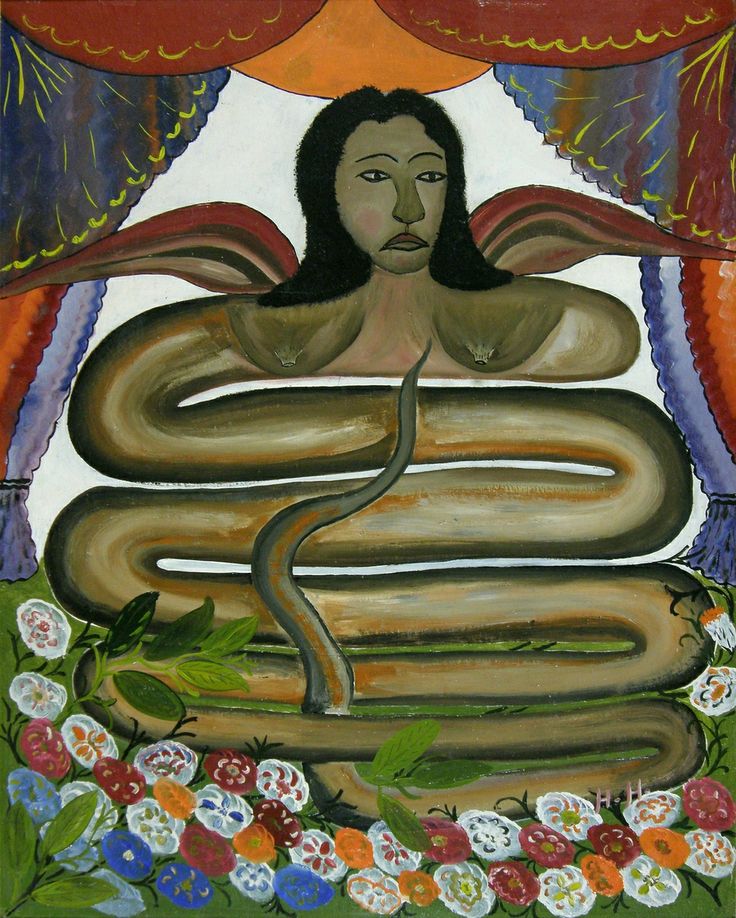 ‘Maitresse Erzulie’ by Hector Hyppolite